
Many homeowners and DIY builders ask how many inches are wall studs apart when planning renovations, hanging heavy fixtures, or learning basic framing principles. Stud spacing plays a critical role in structural stability, insulation performance, and code compliance. While most residential walls follow predictable spacing standards, variations exist depending on building type and load requirements. Therefore, answering how many inches are wall studs apart requires looking at construction standards, wall function, and structural design.
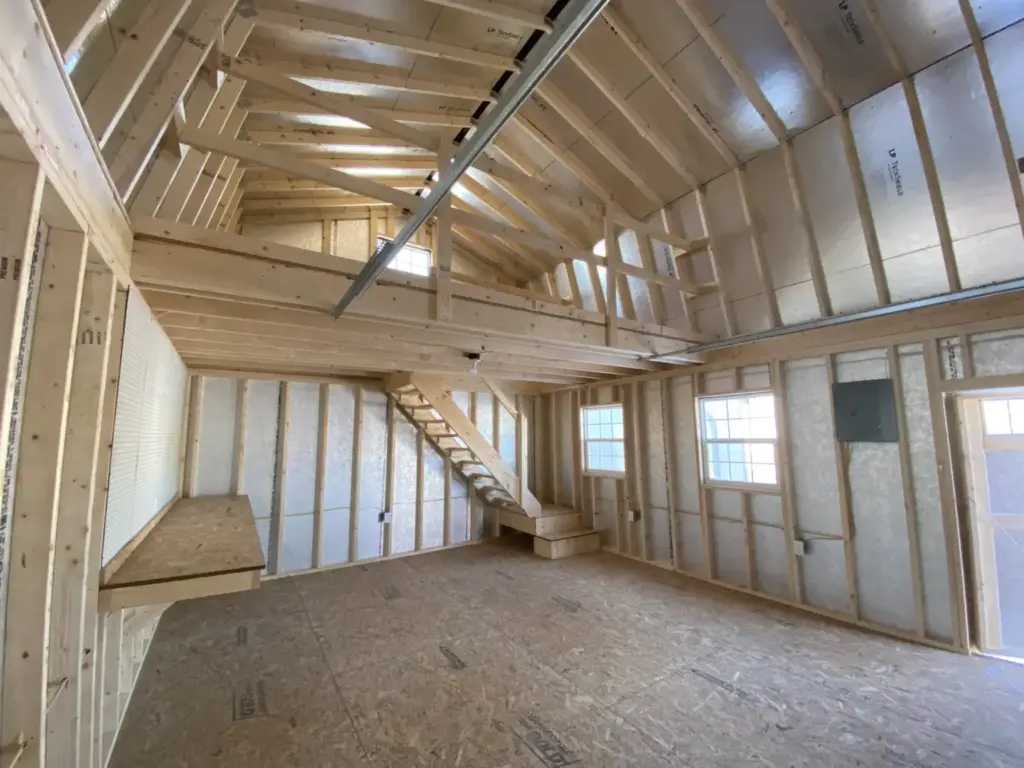
In most modern residential construction, wall studs are spaced either 16 inches or 24 inches on center. The phrase “on center” means the measurement runs from the center of one stud to the center of the next. This spacing ensures balanced load distribution and proper attachment for drywall and exterior materials. Understanding how many inches are wall studs apart helps homeowners avoid mistakes when cutting openings or installing hardware.
Standard Stud Spacing in Residential Construction
The most common spacing in residential walls is 16 inches on center. Builders use this measurement because it provides strong structural support while aligning efficiently with standard building materials. Drywall sheets and plywood panels are typically manufactured in widths that align with 16 inch framing intervals. As a result, the structure remains both strong and material efficient.
In some cases, especially in energy efficient or cost conscious builds, studs may be spaced 24 inches on center. This reduces lumber usage and increases cavity space for insulation. However, builders must ensure that structural loads remain adequately supported. When asking how many inches are wall studs apart, 16 inches remains the most reliable standard.
Why 16 Inches On Center Is So Common
Sixteen inch spacing became standard because it balances strength and material efficiency. Closer spacing increases wall rigidity and load bearing capacity. In addition, it allows consistent support for drywall seams and siding panels. Contractors rely on this measurement to simplify layout and reduce waste.
When calculating how many inches are wall studs apart in load bearing walls, 16 inches often appears in building code requirements. It provides sufficient support for roof and floor loads in most single story structures. This spacing also makes locating studs easier during renovations.
When 24 Inch Spacing Is Used
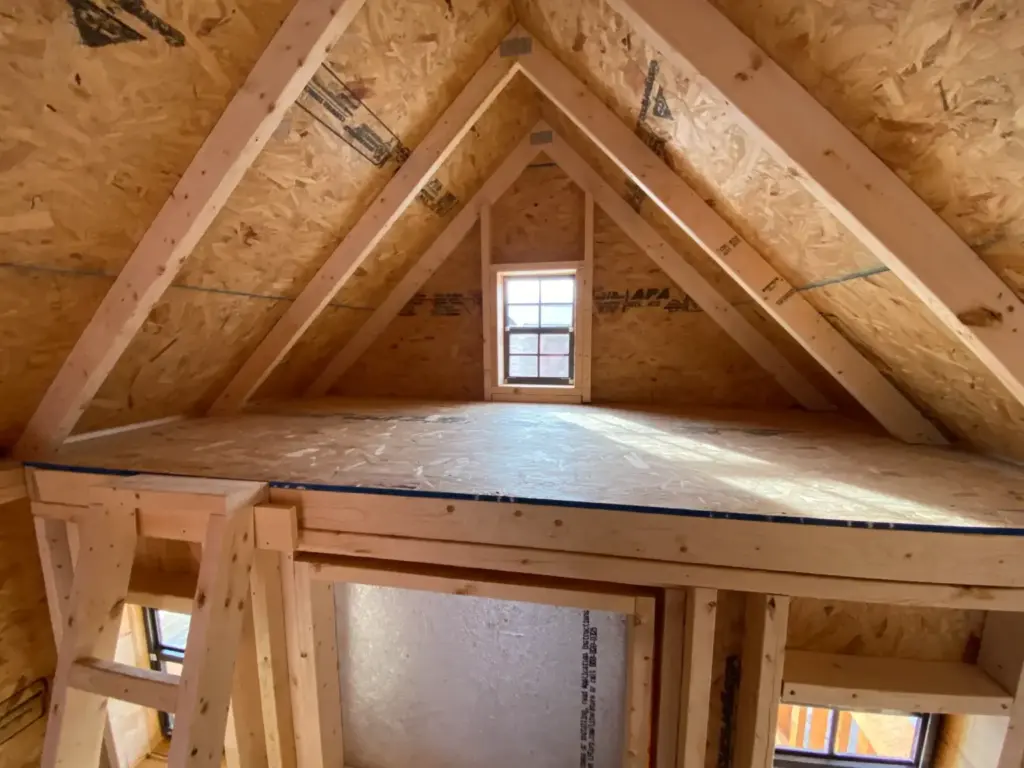
Builders sometimes use 24 inch spacing in non load bearing walls or in structures engineered to support wider spans. This approach reduces lumber costs and increases insulation cavity depth. However, wider spacing may require thicker drywall or reinforced sheathing to maintain stability.
Before assuming how many inches are wall studs apart in a particular wall, inspect the framing directly. Builders often adjust spacing around windows, doors, and structural openings to accommodate headers and support elements.
Stud Spacing in Garages and Workshops
Garage and workshop structures often follow the same spacing rules as residential homes, but load demands may differ. Larger openings and roof spans sometimes require additional reinforcement. In these settings, builders may combine 16 inch spacing with engineered headers to support overhead loads.
For example, a durable structure such as the 14×36 Modern Garage relies on strong framing systems to support wide door openings and roof loads. Proper stud spacing contributes to overall structural performance and long term durability.
Stud Spacing in Multi Level Structures
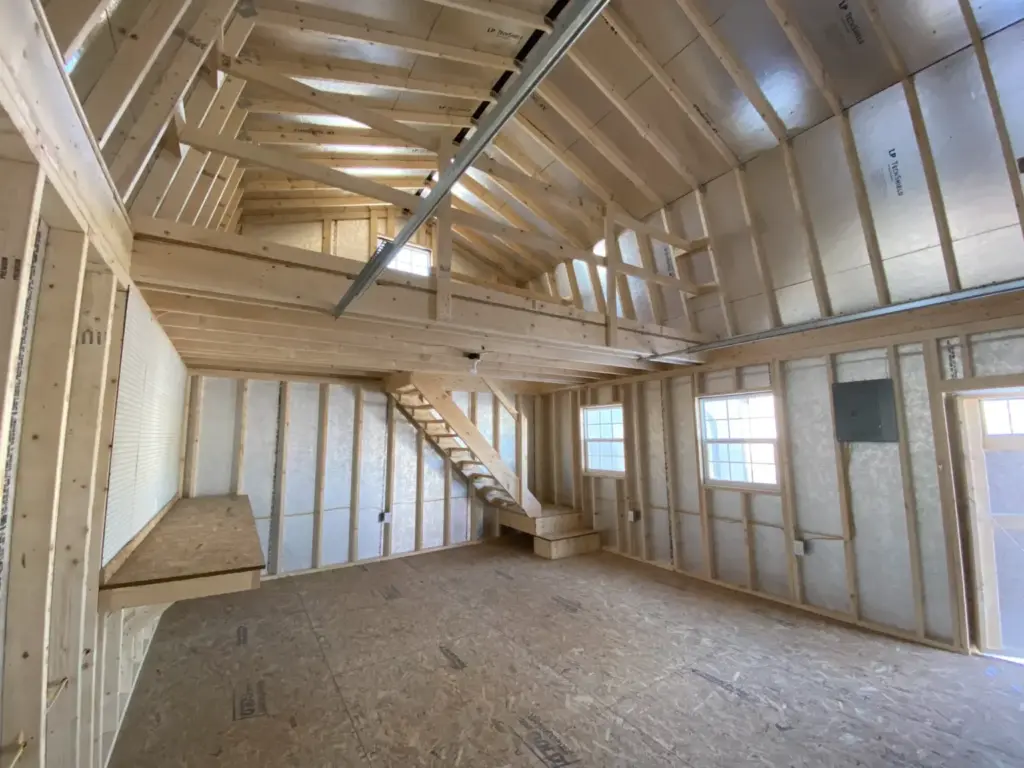
In multi level construction, stud spacing becomes even more critical. Upper floors transfer weight through vertical framing members down to the foundation. Misaligned studs can create uneven load paths and structural stress.
A structure like the 16×24 2 Story Workshop depends on careful stud alignment between levels. Builders typically maintain 16 inch spacing in these cases to ensure consistent strength and stability.
How To Measure Stud Spacing Accurately
If you want to confirm how many inches are wall studs apart in your own home, use a stud finder or measure from an inside corner. Most builders place the first stud flush against the corner and continue at consistent intervals. Measuring from the center of one stud to the center of the next provides the correct spacing.
Remove outlet covers if necessary to see where studs sit. Electrical boxes often attach directly to studs, which helps confirm location. Accurate measurement prevents mistakes when mounting cabinets, shelving, or heavy fixtures.
Building Codes and Structural Guidelines
Building codes determine acceptable stud spacing based on wall height, load conditions, and material type. Local regulations may require 16 inch spacing for load bearing walls and allow 24 inch spacing for non load bearing partitions. Engineers calculate these requirements to ensure safety.
For technical framing standards and structural tables, the International Code Council provides detailed references at ICC. Reviewing official code guidance clarifies how many inches are wall studs apart under different design conditions.
Why Stud Spacing Matters for Homeowners
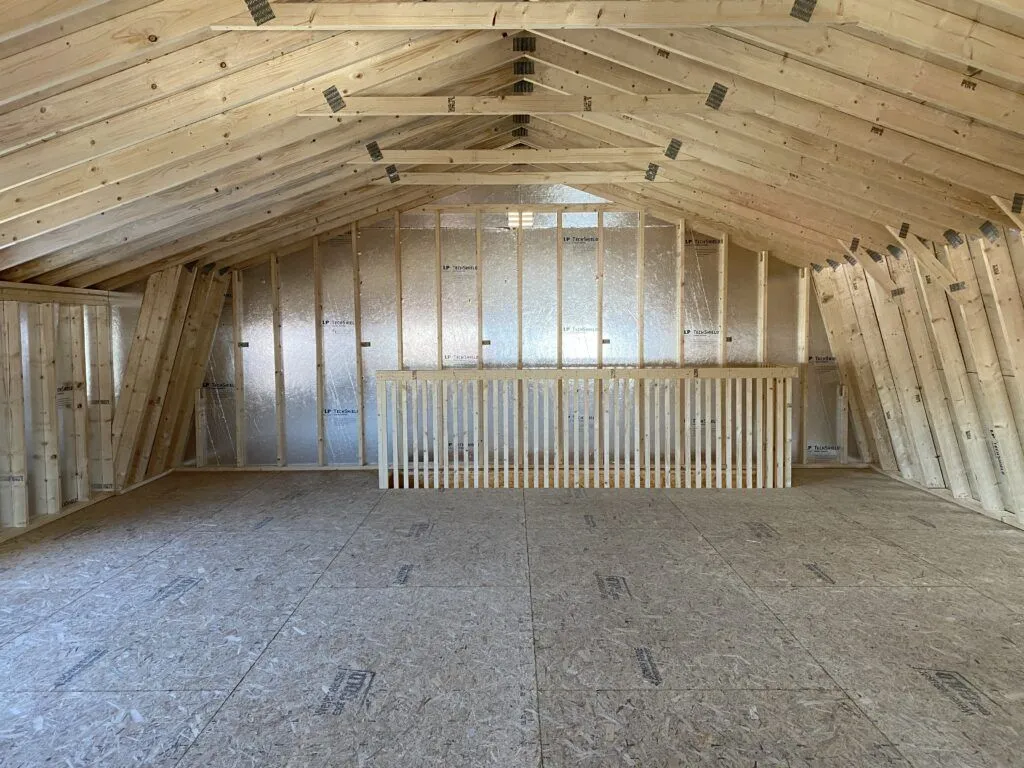
Understanding how many inches are wall studs apart helps homeowners during remodeling projects. Proper spacing affects insulation performance, drywall installation, and mounting strength. When hanging heavy items such as cabinets or wall mounted equipment, attaching directly to studs ensures stability.
Stud spacing also influences long term structural durability. Consistent framing prevents wall bowing and improves load distribution. Whether building new or renovating, knowing how many inches are wall studs apart supports safe decision making.
Why Stud Spacing Directly Impacts Wall Strength
When asking how many inches are wall studs apart, it is important to understand why spacing matters structurally. Studs spaced 16 inches on center create a stronger wall because weight distributes more evenly across vertical framing members. This spacing improves resistance against wind pressure, roof loads, and interior stress. In contrast, 24 inch spacing reduces material use but slightly decreases rigidity unless supported by engineered design. The distance between studs also affects drywall performance. Panels attach more securely when framing remains consistent and properly aligned.
nsulation performance improves as well because cavities maintain uniform depth and shape. Builders must also consider wall height when determining how many inches are wall studs apart. Taller walls often require closer spacing or larger framing members to maintain structural stability. Whether building a garage, workshop, or home, stud spacing influences strength, finish quality, and long term durability. Choosing the correct spacing ensures compliance with building codes and prevents structural weaknesses that may develop over time.

Conclusion
So how many inches are wall studs apart in most buildings? In residential construction, 16 inches on center remains the most common spacing, while 24 inches may appear in certain non load bearing or engineered walls. Stud spacing directly affects strength, insulation, and material efficiency. Ohio Cabins and Structures designs garages, workshops, and cabins with strong framing systems built for long term performance. This article explained how many inches are wall studs apart and why that spacing matters in structural construction. To explore durable buildings built with reliable framing, visit Ohio Cabins and Structures.